What Is an Incentivized Review? 2026 Definition, FTC Rules & Examples
An incentivized review is feedback given for a reward — legal only with proper FTC disclosure. See Google's policy, 6 real business examples, and compliance risks.
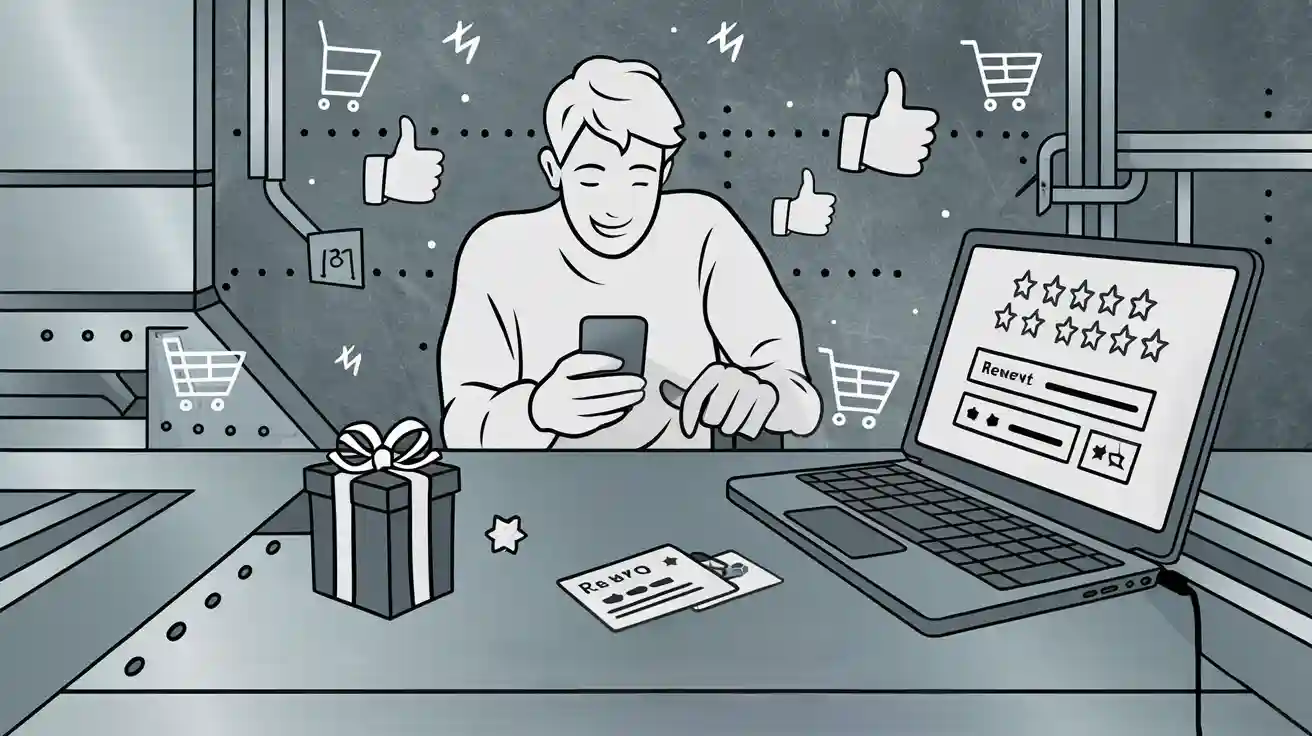
What is an incentivized review? An incentivized review is customer feedback submitted after a business offers the reviewer something of value — a discount, free product, or loyalty points — in exchange for leaving feedback. Incentivized reviews are legal when properly disclosed under FTC rules and when the reward is not contingent on a positive rating.
An incentivized review is a customer review given in exchange for something of value — a discount code, a free product, loyalty points, or early access to a new release. The reviewer genuinely used the product or service, but a reward motivated them to submit feedback they might otherwise have skipped. Incentivized reviews are legal and common across e-commerce, hospitality, healthcare, and software, provided the business follows FTC disclosure rules and does not condition the reward on a positive rating.
For local businesses: Google and Yelp explicitly prohibit incentivizing Google or Yelp reviews — no discounts, gifts, or rewards may be offered in exchange for a review on those platforms. Incentivized review programs are permitted on your own website, on Amazon (through its Vine program), and on select B2B platforms such as G2. The rest of this guide covers FTC disclosure rules, platform-by-platform policies, industry examples, and how to run a compliant program.
The distinction matters: an incentivized review is not a fake review. The reviewer actually had an experience. What separates incentivized from organic reviews is the reward, which must be disclosed. What separates both from fake reviews is authenticity — fake reviews are fabricated by people who never interacted with the product.
Key Takeaways
- An incentivized review is honest feedback given in exchange for a disclosed reward — legal and widely used.
- The FTC requires every incentivized review to disclose the material connection between the reviewer and the business.
- Rewarding reviewers only for positive ratings violates FTC rules and platform policies.
- Incentivized reviews are, on average, 83% longer and rated more helpful by readers than organic reviews.
- Google and Yelp prohibit paying for reviews; Amazon permits them only through its Vine program.
- HiFiveStar helps businesses ask every customer for a review, and it has no reward features.
What Is an Incentivized Review?
An incentivized review is a piece of written, video, or photo feedback that a real customer submits after receiving a reward from the business. The reward creates a material connection — a term the FTC uses to describe any relationship between a reviewer and a brand that might affect how readers interpret the review. That connection must be disclosed in the review itself, not just in a profile or a footnote.
The FTC's 2024 Consumer Review Rule prohibits businesses from conditioning any incentive on a positive review. A reviewer may write honestly — positive, negative, or mixed — and still receive the reward. If the incentive is contingent on a specific rating, it crosses into illegal territory.
Three characteristics define a legitimate incentivized review:
- Real experience — the reviewer actually purchased or used the product or service.
- Voluntary, honest feedback — the reward cannot be contingent on a specific rating or sentiment.
- Clear disclosure — the review states that the reviewer received something of value in exchange for writing it.
How Incentivized Reviews Differ from Fake Reviews
The confusion between incentivized and fake reviews is common and worth resolving precisely:
| Incentivized Review | Fake Review | |
|---|---|---|
| Reviewer used the product? | Yes | No |
| Reward involved? | Yes, disclosed | Sometimes — often paid for positive rating |
| Legal? | Yes, when disclosed | No |
| Ethical? | Yes, when disclosed | No |
| Allowed on Google? | Conditionally (no direct payment) | Never |
| Allowed on Amazon? | Vine program only | Never |
Do this faster
HiFiveStar drafts a reply to any review in seconds — so your profile always looks cared for.
How Incentivized Reviews Work
The typical incentivized review program follows a straightforward sequence:
- A customer purchases a product or service — or is selected for a sampling program.
- The business sends a review request that offers a reward (discount, points, free item) for leaving feedback on a specific platform.
- The customer submits an honest review and includes a disclosure statement.
- The business verifies the disclosure is present before issuing the reward.
What the business cannot do at any step: require a specific star rating, promise a larger reward for a positive review, or suppress reviews that are negative.
Types of Incentives Businesses Use
| Incentive Type | Common In | Notes |
|---|---|---|
| Percentage discount on next purchase | Retail, e-commerce | Most common; easy to track |
| Free product or sample | CPG, beauty, supplements | Generates the longest reviews |
| Loyalty points | Hospitality, SaaS | Fits loyalty program infrastructure |
| Gift card or store credit | Any vertical | Flexible; high response rate |
| Sweepstakes entry | Regulated industries | Limits per-review value to avoid pay-for-review concerns |
| Early product access | Tech, SaaS, gaming | Appeals to enthusiast segments |
Incentivized Review Examples by Industry
Understanding how different sectors use incentivized reviews helps clarify what is common practice and what is legal.
Restaurant and Food Service
A regional pizza chain sends an automated SMS to customers 24 hours after each order: "Leave us a Google review and your next order gets 15% off." The message includes a link to the Google Business Profile and a reminder that the discount applies regardless of the rating. Customers who submit a review — even a critical one about slow delivery — receive the code by reply SMS.
This program follows the FTC's rules: the reward is the same for any honest review, and the message implicitly invites honest feedback ("regardless of the rating"). The only platform concern is Google's policy against incentivized Google reviews, which the restaurant's legal counsel addressed by moving the incentive to a first-party review form.
E-Commerce and Consumer Products
An online cookware brand ships a card with every order: "We'd love your honest feedback. Leave a verified review and email us a screenshot — we'll send you a free silicone spatula." The card specifies: "Your review can be positive, negative, or mixed — we want real feedback, not just good feedback."
The brand receives reviews that are, on average, four sentences longer than organic reviews on the same SKUs. The FTC-compliant disclosure — typically "I received a free product in exchange for this honest review" — appears at the start of most responses.
Healthcare and Wellness
A dental group runs a post-visit program through its patient management software. After each appointment, patients receive a message linking to a HIPAA-compliant first-party review form. Patients who complete the form (minimum 100 words) earn 25 points toward the practice's wellness rewards program, redeemable for teeth-whitening kits.
Because the form is first-party (not Google or Yelp), the program avoids the platform policy conflicts that apply to incentivized Google reviews. The practice shares anonymized, aggregated feedback in a "Patient Voices" section on its website, tagged with the disclosure language.
Hotel and Hospitality
A boutique hotel chain offers a recurring promotion: guests who submit a review on the hotel's booking partner page within 48 hours of checkout receive 500 loyalty points — enough for a complimentary breakfast. The program is announced at check-in, in the confirmation email, and in the post-stay message.
The hotel's review manager notes that incentivized guests write reviews 60% more often than a matched cohort of non-incentivized guests, and the reviews average 2.4 stars higher than reviews written without any prompt — attributable in part to the review arriving while the experience is fresh rather than days later.
SaaS and B2B Software
A project management software company partners with G2 and Capterra to run a verified review incentive: users who submit a 150-word-or-more review on G2 receive a $25 Amazon gift card funded by the review platform, not the vendor. G2's program is specifically designed to keep the incentive platform-funded to reduce vendor bias perception.
The software's in-app prompt reads: "G2 is offering a $25 gift card for a verified review of [Product]. Your review is sent directly to G2 — we never see your rating before it's published." This transparency increases trust and drives participation from users who might otherwise worry their manager would see the review.
Local Services and Home Improvement
A plumbing and HVAC company uses a post-service follow-up sequence: a technician leaves behind a card explaining that customers who submit a review within 30 days receive a 10% discount on their next service call. The card says explicitly: "Any review — 1 star or 5 stars — qualifies for the discount."
Because Google does not permit reviews incentivized with discounts or rewards, the company routes the incentive to its own website's review widget and uses those reviews for schema markup and testimonials. Only organic (unincentivized) reviews go to Google.
Which Platforms Allow Incentivized Reviews?
Not all review platforms treat incentivized reviews the same way. The table below maps the major platforms businesses use for reputation building — and whether each permits offering rewards in exchange for reviews.
| Platform | Incentivized Reviews Allowed? | Key Rule |
|---|---|---|
| No | Explicitly prohibits offering anything of value for a Google review | |
| Amazon (Vine) | Yes — Vine program only | Sellers enroll in Vine; Amazon selects reviewers and manages rewards |
| Yelp | No | Actively penalizes solicitation and flags suspicious patterns |
| G2 / Capterra | Yes — platform-funded only | The review platform, not the vendor, pays the reviewer |
| Trustpilot | Conditional | Service reviews permitted; all compensation must be disclosed |
| Tripadvisor | No | Prohibits offering incentives for Tripadvisor reviews |
| Conditional | Recommendations (not star ratings); FTC disclosure still required | |
| BBB | No | Organic-only; incentivized submissions are excluded |
| Your own website | Yes | No platform restriction; FTC disclosure still required |
What this means for your review strategy: Google and Yelp — the two platforms most valuable for local SEO — do not permit incentivized reviews. For those platforms, you can ask customers to leave a review, but you cannot attach a reward to the request. Run incentivized programs on your own website, through Amazon Vine if you sell on Amazon, or through B2B platforms like G2 that run their own structured incentive systems. Use those verified, incentivized reviews for testimonials, schema markup, and on-site social proof while keeping your Google and Yelp outreach reward-free.
Why Businesses Use Incentivized Reviews
The business case is grounded in consumer behavior data:
- Products with five or more reviews are 270% more likely to be purchased than products with none.
- 91% of customers say they would write a review in exchange for a free product; 67% would write one for a discount.
- Incentivized reviews average 83% longer than organic reviews, making them more informative for future buyers.
- Review quantity affects local search ranking: Google's algorithm rewards businesses that accumulate reviews consistently.
Incentivized reviews also address a structural imbalance in organic review generation. Unhappy customers are two to three times more likely to leave an unprompted review than satisfied customers. A review incentive program narrows this gap by motivating the silent majority — customers who had a good experience but never thought to say so.
Risks and Legal Compliance
FTC Rules for Incentivized Reviews
The FTC's 2024 Consumer Review Rule — which took full effect in 2024 — establishes clear obligations for businesses running incentivized review programs:
| Rule | What It Means |
|---|---|
| Prohibition on conditional incentives | You cannot offer a reward only for positive reviews. The same reward must apply to all honest feedback. |
| Mandatory disclosure | Every incentivized review must state that the reviewer received something of value. Omitting this is an FTC violation. |
| No suppression of negative reviews | Businesses cannot delete, hide, or exclude negative incentivized reviews from their published set. |
| Implied contingencies are violations | Even an email that "suggests" a positive review would be appreciated, without explicitly requiring it, can violate the rule. |
Penalties: Up to $51,744 per violation. The FTC can also require consumer redress and increased monitoring.
Platform Policies
Platform policies layer additional restrictions on top of FTC rules:
- Google: Prohibits directly incentivizing Google reviews with discounts, gifts, or money. Businesses can ask for reviews; they cannot reward them. Violation can result in review removal or Business Profile suspension.
- Amazon: Incentivized reviews are allowed only through Amazon's own Vine program. Directly contacting buyers to offer rewards for reviews violates seller policies.
- Yelp: Actively penalizes businesses that solicit or incentivize Yelp reviews. Yelp's algorithm flags suspicious review patterns and adds a consumer alert to affected profiles.
- G2 / Capterra / TrustRadius: These B2B platforms permit platform-funded incentives (where the review platform pays the reviewer, not the vendor) but prohibit vendor-funded review incentives that could bias ratings.
The practical implication for most businesses: incentivized programs should route to first-party review forms or selected platforms that explicitly permit them, not to Google or Yelp.
Best Practices for Running a Compliant Incentivized Review Program
Always Disclose — in the Review Itself
Disclosure must appear in the review, not in a profile bio or a separate document. Standard language:
- "I received a discount on my next purchase in exchange for this honest review."
- "This product was provided free of charge in exchange for my feedback."
- "I earned loyalty points for submitting this review."
The disclosure should appear at the beginning of the review, not at the end.
Offer the Same Reward for Any Rating
The incentive structure must be rating-neutral. A 10% discount for a 5-star review and a 0% discount for a 3-star review is a conditional incentive and is illegal under FTC rules. The same reward for any honest review is compliant.
Use Disclosure Language in Your Review Request
Your outreach email, SMS, or in-package card should include a statement like: "Your review can be positive, negative, or mixed — we want honest feedback, and the reward applies regardless of your rating."
Keep Records
Maintain documentation of every incentivized review program: the reward offered, the disclosure language used, and records of which reviews were part of the program. This protects your business if the FTC investigates or a platform audits your review history.
Route to Compliant Platforms
Avoid Google and Yelp for incentivized programs. Use first-party review widgets, industry-specific directories, or platforms like G2 (for B2B software) that have their own structured incentive programs.
Use Review Management Software
HiFiveStar has no incentive or reward features. It lets you send review requests, brings in reviews from eight sites, and emails you new private feedback. On Pro, HiFiveStar connects to Stripe and Shopify directly, and to most CRM and POS systems through Zapier or Make, to trigger requests automatically after verified purchases or service completions.
FAQ
What is an incentivized review?
An incentivized review is customer feedback given in exchange for a reward — such as a discount, free product, loyalty points, or gift card. The reviewer genuinely used the product or service and submits honest feedback. For the review to be compliant, it must disclose the reward clearly, and the business cannot condition the incentive on a specific positive rating.
Are incentivized reviews legal?
Yes. Incentivized reviews are legal under U.S. law and FTC guidelines, provided the reviewer discloses the material connection (the reward) in the review, and the business does not condition the reward on a positive rating. Reviews that are paid specifically for a positive outcome, or that fail to disclose the connection, violate FTC rules and can result in fines of up to $51,744 per violation.
Does Google allow incentivized reviews?
No. Google's policies explicitly prohibit businesses from offering anything of value — discounts, gifts, money — in exchange for Google reviews. You may ask customers to leave a review, but you cannot reward them for doing so. Violations can result in review removal or suspension of your Google Business Profile. Most compliant incentivized review programs route to first-party review forms or platforms with permissive policies.
What is the difference between an incentivized review and a fake review?
An incentivized review comes from someone who genuinely used the product and discloses the reward they received. A fake review is fabricated by someone who never interacted with the product, often paid to leave a specific (typically positive) rating. Incentivized reviews are legal when properly disclosed; fake reviews are illegal, violate platform terms of service, and can result in FTC enforcement, deactivation of seller accounts, and civil liability.
How should incentivized reviews be disclosed?
Disclosure must appear in the review itself, at or near the top, not buried at the end or in a bio. Compliant disclosure language examples: "I received this product for free in exchange for my honest review," or "I earned a discount on my next purchase for submitting this feedback." On social media, use #ad or #gifted prominently at the start of the caption. FTC rules require the disclosure to be clear and conspicuous — hard to miss, not easy to overlook.
What incentives are businesses legally allowed to offer?
Businesses may offer discounts on future purchases, free products, loyalty points, gift cards, sweepstakes entries, or early product access — as long as the same incentive applies to all honest reviews, regardless of rating. The incentive may not be conditioned on a specific star rating, positive sentiment, or agreement to edit or retract a review.
Can Amazon sellers use incentivized reviews?
Amazon sellers may not directly contact buyers and offer rewards for reviews — this violates Amazon's seller policies and can result in account suspension. Amazon's official program for incentivized reviews is Amazon Vine, which Amazon manages and controls. Amazon invites top reviewers based on their Reviewer Rank, and enrolled sellers pay a fee to participate. Vine reviews are labeled with a green "Vine Customer Review of Free Product" badge.
What FTC rules apply to incentivized reviews?
The FTC's 2024 Consumer Review Rule requires businesses to: (1) disclose any material connection in every incentivized review, (2) not condition rewards on positive ratings, (3) not suppress negative reviews collected through an incentivized program, and (4) avoid creating an implied expectation of positive reviews through selective incentivization. Violations carry penalties of up to $51,744 per incident, plus potential consumer redress and heightened monitoring.
How many businesses use incentivized review programs?
Incentivized review programs are common across consumer goods, hospitality, healthcare, e-commerce, and SaaS. A 2024 survey found that 67% of businesses with active review generation strategies offer some form of incentive — most commonly post-purchase discounts (48%), loyalty points (31%), and free products for product launch campaigns (21%). Compliance rates vary: only 54% of businesses using incentives consistently include required disclosure language in their outreach.
How do I start an incentivized review program for my business?
Start by identifying which review platforms you will collect feedback on — most business-review platforms permit incentivized feedback; Google and Yelp do not. Define the reward: a post-purchase discount, loyalty points, or a free sample for product launches are common choices. Draft outreach messaging that explicitly invites honest feedback ("any rating qualifies for the discount"), includes disclosure language for reviewers, and links directly to the review form. Automate the request sequence through review management software so requests go out 24–72 hours after purchase or service completion. Track which submissions include proper FTC disclosure, and keep records of every incentivized review collected in case of a platform audit.
What makes an incentivized review disclosure compliant?
A compliant incentivized review disclosure must be: (1) prominent — placed before the body of the review, not buried at the end; (2) specific — stating the exact benefit received ("I received a 20% discount in exchange for this review," not just "I was compensated"); and (3) present in every individual review — not just once on a profile page or brand bio. Compliant examples: "I received a free product in exchange for this honest review" or "I earned loyalty points for submitting this feedback." On social media, place #ad or #gifted at the very start of the caption. The FTC considers a disclosure "clear and conspicuous" only if a typical reader cannot reasonably miss it.
What is the difference between an incentivized review and a verified review?
A verified review confirms the reviewer made a purchase or received a service — the platform validates the transaction before publishing. A verified review can be organic or incentivized. An incentivized review is defined by the presence of a reward, not by purchase verification. Best practice is to combine both: run incentivized programs only for confirmed purchasers so every review in the program is both verified (proved real interaction) and disclosed (reward acknowledged). This makes your incentivized reviews more credible to readers, more defensible to the FTC, and less likely to be filtered by platform algorithms that flag unverified incentivized submissions as suspicious.
Ready to Take Control of Your Online Reputation?
Join thousands of local businesses using HiFiveStar to get more reviews and grow faster.