10 Jewellery Business Ideas With Real Startup Costs & Margins (2026)
10 jewellery business ideas you can start for under $5,000 — with real startup costs, gross margins (up to 85%), and a step-by-step launch guide for each niche.

Quick Answer: A small jewelry business is an independent operation—usually 1–5 people—that designs, makes, or sells jewelry through online stores, craft markets, or a small retail space. Startup costs range from $500–$5,000 depending on niche (handmade, permanent welded jewelry, vintage resale, or repair). The best niches reach 65–85% gross margins. Three factors determine success: a clearly defined niche, a strong online storefront, and consistent customer reviews from day one.
Starting a small jewelry business in 2026 has never been more accessible—or more profitable. The global jewellery market continues to grow, and niche players with a clear focus are capturing loyal customer bases that larger brands simply can't reach. Whether you're exploring jewellery business ideas for the first time or looking to expand an existing operation, choosing the right niche can transform a passion for jewellery into a thriving income stream. This guide covers 10 profitable jewellery business ideas with real startup costs, margin data, and actionable steps tailored to your skills, budget, and goals.
Whether you're researching how to start a small jewelry business from scratch, looking to expand an existing operation into more profitable niches, or comparing startup costs and margins across different formats—this guide gives you the specifics. You'll find realistic cost breakdowns, actual margin data, and the strategic steps that separate thriving small jewelry businesses from those that stall in year one.
Key Takeaways
- Niche focus is the single biggest success factor. Small jewelry businesses that specialize — in permanent welding, ethical sourcing, custom engraving, or a specific demographic — outcompete generalist stores on both margin and customer loyalty.
- Sustainable and personalized jewelry are the fastest-growing segments. Eco-conscious materials and custom designs command premium pricing and attract repeat buyers who care about provenance and personal meaning.
- Permanent jewelry delivers some of the best margins in the category. Materials typically cost $5–$15 per piece, while finished welded bracelets and necklaces sell for $60–$100, yielding 70–85% gross margin.
- Online reviews are your most important growth asset. First-time buyers rely on social proof before purchasing from an unfamiliar small jewelry business — building your review count early accelerates every subsequent customer acquisition.
- Startup costs are lower than most people assume. Most small jewelry business models are operational for under $5,000, with handmade and DIY-kit businesses launchable for as little as $500–$2,000.
Is a Jewelry Business Profitable?
Yes — a jewelry business is one of the most profitable small-business categories you can start. Gross margins across the ten models in this guide range from 40% to 85%, with the majority of niches landing between 55% and 75%. The jewelry industry's combination of low material costs, high perceived value, and premium pricing power makes it accessible to bootstrapped founders and highly profitable once you find your niche.
Here is what the numbers look like across common jewelry business models:
- Permanent (welded) jewelry: 70–85% gross margin. Materials cost $5–$15 per piece; finished welded bracelets sell for $60–$100.
- Jewelry repair & restoration: 65–80% gross margin. Labor is the primary input, and skilled repair commands premium pricing.
- Personalized & custom jewelry: 60–80% gross margin. Design fees and uniqueness premiums justify prices well above material costs.
- Sustainable & ethical jewelry: 55–75% gross margin. Values-driven buyers pay more for transparent sourcing and eco-friendly materials.
- Handmade & artisan jewelry: 50–70% gross margin. Labor-intensive, but a clear brand and direct sales keep margins healthy.
What Makes a Jewelry Business More (or Less) Profitable?
Three factors separate profitable jewelry businesses from those that struggle:
- Niche focus. Specialists — in permanent welding, ethical sourcing, custom engraving, or a specific demographic — outcompete generalist stores on both margin and loyalty. A clearly defined niche lets you charge premium prices and attract repeat buyers.
- Overhead control. Most profitable jewelry businesses start from a home studio or online-only storefront, keeping fixed costs under $500/month. Physical retail adds foot traffic but compresses net margin unless volume is high.
- Customer reviews and social proof. First-time jewelry buyers rely on reviews before purchasing from an unfamiliar brand. A business with 50+ recent five-star reviews converts at significantly higher rates — and Google reviews specifically drive both conversion and local search visibility.
The bottom line: a jewelry business is not just profitable in theory. The startup costs are low ($500–$5,000 for most models), the margins are strong (50–85%), and the path to profitability is short if you specialize, price correctly, and build social proof from day one.
Do this faster
More 5-star reviews, higher local ranking, more customers. HiFiveStar helps you run that loop.
Top Jewellery Business Ideas at a Glance
Before diving into each jewellery business idea, here is a quick comparison of the 10 models covered in this guide — so you can identify which fits your budget, skills, and goals.
| Business Model | Startup Cost | Gross Margin | Best For |
|---|---|---|---|
| Handmade & Artisan Jewelry | $500–$2,000 | 50–70% | Makers with bench skills or crafting experience |
| Sustainable & Ethical Jewelry | $1,000–$5,000 | 55–75% | Entrepreneurs who want values-led brand identity |
| Personalized Jewelry Services | $500–$3,000 | 60–80% | Customer-focused sellers with design/engraving access |
| Niche Market Jewelry | $500–$2,500 | 50–70% | Makers targeting a specific hobby, sport, or community |
| Permanent Jewelry (Welded) | $1,000–$3,000 | 70–85% | Event-ready sellers; high margin, experiential service |
| Upcycled & Vintage Jewelry | Under $500 | 55–75% | Sourcing-savvy sellers who love thrift and estate markets |
| Digital-First E-commerce | $500–$2,000 | 50–70% | Online-first sellers comfortable with Etsy or Shopify |
| DIY Jewelry Kits & Workshops | $500–$2,500 | 55–75% | Educators and community builders who enjoy teaching |
| Smart Jewelry & Wearable Tech | $5,000–$20,000 | 40–60% | Tech-savvy founders with industry partnerships |
| Men's Fashion Jewelry | $500–$2,000 | 55–70% | Designers focused on underserved male demographics |
| Jewelry Repair & Restoration | $1,000–$3,000 | 65–80% | Craftspeople with bench repair skills |
The models with the best margin-to-startup-cost ratio are permanent jewelry (70–85% margins on $1,000–$3,000 startup) and jewelry repair (65–80% margins on comparable investment). The lowest-barrier entry points are upcycled and vintage resale (under $500 to start) and handmade jewelry ($500–$2,000).
What Is a Small Jewelry Business?
A small jewelry business is an independently owned enterprise that designs, makes, curates, repairs, or resells jewelry — typically operated by one to five people, often from a home studio, market stall, online storefront, or small retail space. Unlike mass-market retailers and large jewelry chains, a small jewelry business competes on craft, personalization, niche focus, and direct customer relationship rather than price or volume.
Key characteristics of a small jewelry business include:
- Independent ownership: Sole proprietors, partnerships, or small LLCs — not franchises or chain operations
- Niche specialization: A defined product focus (permanent welded jewelry, ethical sourcing, custom engraving, vintage curation) that distinguishes the brand from generalist competitors
- Direct customer relationships: Owners who talk to buyers directly — at craft fairs, on Etsy, via DM — and build repeat business through personal rapport and quality
- Flexible business model: The same business can operate at a farmers' market, on Shopify, and at pop-up events, adjusting channel mix as demand shifts
- Low barrier to entry: Most small jewelry business models are operational for $500–$5,000 — lower startup requirements than almost any retail category
Small jewelry businesses range from solo artists making $10,000–$30,000 per year as a side income to full-time brands generating $100,000+ in annual revenue. What they share is the combination of craft, curation, and customer connection that larger brands can't replicate at scale.
How to Start a Small Jewelry Business in 2026
Starting a small jewelry business is more achievable than ever, but it rewards entrepreneurs who follow a clear framework from the beginning. The steps below give you a repeatable system—whether you're launching from your kitchen table, a studio, or entirely online.
1. Choose Your Niche Before You Buy Anything
Every profitable small jewelry business starts with a focused niche, not a general store. Trying to sell everything to everyone dilutes your brand identity and spreads your marketing budget too thin. Decide first whether you'll focus on handcrafted artisan pieces, curated vintage finds, personalized engravings, or a trending format like permanent welded jewelry. Your niche determines your target customer, your price point, and which platforms will work best for you—so commit to it before sourcing a single piece of inventory.
2. Handle Your Legal and Financial Foundation
Register your small jewelry business as a legal entity before you make your first sale. Most solo founders start as a sole proprietor, then form an LLC as revenue grows to protect personal assets from business liabilities. You'll need a general business license from your city or county, a seller's permit if your state taxes jewelry sales, and possibly a home occupation permit if you work from home. Open a dedicated business bank account from day one—mixing personal and business finances creates accounting headaches and weakens your legal protections.
3. Source Materials and Build Supplier Relationships
Reliable sourcing is the operational backbone of any small jewelry business. For handmade pieces, build relationships with two or three wholesale suppliers for metals, gemstones, and findings rather than depending on a single source. For vintage or upcycled jewelry, establish regular sourcing routes through estate sales, antique fairs, and online auction platforms. If you plan to market your pieces as ethically sourced or conflict-free, request material certifications from suppliers upfront and document your supply chain.
4. Launch Your Online Storefront and Google Presence
An online storefront is essential for any small jewelry business in 2026, even if you primarily sell at craft fairs or local markets. Set up on Etsy, Shopify, or both, optimizing each product listing with detailed descriptions, high-resolution photos from multiple angles, and relevant keywords. A Google Business Profile is equally important—it's free, surfaces your business in local search results, and serves as the primary place customers leave public reviews. Populate your profile completely, including business hours, photos, and a link to your shop.
5. Price for Sustainable Profit
Underpricing is the single most common mistake new small jewelry business owners make. Use the keystone formula as your baseline: cost of materials × 2 for wholesale, × 4 for retail. Add your labor at a realistic hourly rate—at minimum $20–$30/hour for handmade work—plus overhead including tools, packaging, platform fees, and shipping supplies. Premium positioning backed by great photography, consistent branding, and authentic customer reviews lets you hold higher prices than discount competitors while attracting buyers who value quality over a bargain.
6. Build Reputation Through Reviews and Social Proof
Shoppers considering a small jewelry business they've never bought from before need social proof to convert. Ask every satisfied customer to leave a Google or Etsy review within 24 hours of receiving their order—that's when enthusiasm is highest. A small jewelry business with 50+ recent 5-star reviews converts new visitors at roughly 2–3× the rate of one with fewer than 10 reviews, regardless of product quality.
Key reputation-building actions for a small jewelry business:
- Request reviews immediately after delivery. Send a follow-up message 24–48 hours after the order arrives—response rates drop sharply beyond 72 hours.
- Make it easy. Include a direct link to your Google Business Profile or Etsy review page. Every extra step costs you a review.
- Respond to every review. Replying to 5-star reviews publicly shows prospective customers you're attentive; responding professionally to negative reviews shows you stand behind your work.
- Display social proof at point-of-purchase. Embed a review widget on your website or Shopify storefront so first-time buyers see star ratings and testimonials before they checkout.
- Automate the process. Tools like HiFiveStar automate review requests via SMS and email on Pro, so you spend less time chasing feedback and more time making jewelry while your reputation builds itself in the background.
Sustainable & Ethical Jewelry Brands
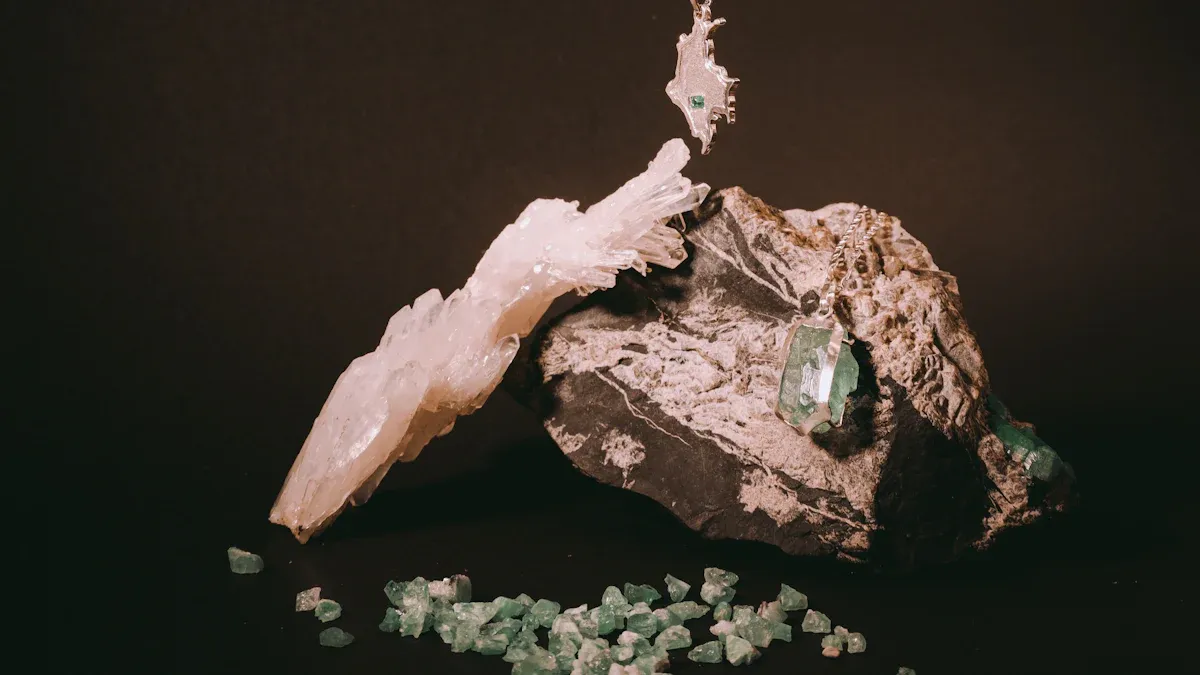
Building a small jewelry business around sustainability is one of the strongest positioning plays available in 2026. Consumers — particularly younger, higher-income buyers — increasingly choose jewelry based on how it is made, not just how it looks, and research consistently confirms that design quality and ethical sourcing are now equal purchase drivers rather than competing priorities. 58% of affluent young consumers surveyed in 2019 named sustainability a key factor in luxury jewelry purchases — a trend that has only strengthened since.
Eco-Friendly Materials & Sourcing
Sustainable jewelry starts with material choices. Recycled gold, silver, platinum, and lab-grown diamonds are the most common ethical alternatives to conventionally mined materials — they carry the same quality and visual appeal without the extraction footprint. Ethically certified gemstones from Fairmined or Fairtrade suppliers ensure worker welfare and environmental protection throughout the supply chain. Beyond precious metals, alternative materials like reclaimed wood, sea glass, organic textiles, bamboo, and cork add texture and storytelling to a collection. Brands like SOKO, which uses reclaimed brass, cow horn, and bone sourced through Kenyan artisan networks, show how ethical material choices can become a central part of a brand's identity rather than an afterthought.
Transparent Supply Chains
Supply chain transparency has moved from optional to expected among conscious jewelry buyers. Customers now actively avoid conflict diamonds and supply chains involving forced labor, and they have the tools to ask pointed questions before purchasing. Traceability — showing a diamond or gold nugget's journey from mine to finished piece — directly addresses these concerns with verifiable evidence rather than marketing claims. Younger high-income buyers are particularly likely to research sourcing before purchase, and brands that publish clear documentation of their supply chain are consistently rated as more trustworthy. For a small jewelry business, transparency does not require expensive certification from day one — but having honest answers ready about where your materials come from is the minimum viable standard.
Marketing Authenticity
Authenticity in marketing an ethical jewelry brand means demonstrating your commitments rather than just claiming them. Certifications from Fairmined, the Responsible Jewellery Council, or equivalent bodies give verifiable proof that your materials meet sourcing standards — sharing these certificates builds confidence with values-driven buyers. User-generated content is equally powerful: customers genuinely love to photograph and share ethically made pieces that carry personal meaning, so encouraging that sharing builds organic reach alongside your brand story. For small jewelry businesses working with upcycled materials, showcasing the source item alongside the finished piece — the vintage brooch that became a pendant, the inherited ring that was remade — gives customers a narrative they want to share.
Personalized Jewelry Services
Personalized jewelry is one of the fastest-growing segments in the category, and it rewards small jewelry businesses that invest in differentiation over volume. Consumers increasingly want pieces that reflect their own identity rather than mass-produced designs, and the custom jewelry services market is projected to reach $2.85 billion by 2035 as demand accelerates. Nearly 60% of buyers specifically seek custom designs to express their personal style — a buyer intent that is nearly impossible for large-volume brands to satisfy at scale, which creates durable competitive space for specialized small jewelry businesses.
Bespoke Design & Customization
Bespoke jewelry service is the highest-value tier of personalization, and roughly 55% of custom jewelry buyers are specifically seeking one-of-a-kind pieces rather than customized catalog items. Geometric boldness is driving 2026 design demand — angular cuts, triangular pendants, and asymmetric settings using rare stones like tanzanite or alexandrite attract buyers who want to stand out rather than blend in. Combining contemporary forms with heirloom elements is another growth area: updating classic designs or reimagining inherited pieces for modern wear builds deep emotional connection with clients who become long-term advocates for your business.
Engraving & Monogramming
Engraving and monogramming are accessible entry points into personalized jewelry service that don't require the capital investment of full custom design. Engraving dates, names, coordinates, or short phrases inside rings and on pendants adds significant emotional weight to pieces that might otherwise feel generic. Hidden details — secret inscriptions visible only to the wearer, micro-engravings on clasps, small gemstone additions inside bands — create intimate personalization that buyers find deeply meaningful and routinely share with others. For a small jewelry business, offering engraving as an add-on to your core product line can meaningfully increase average order value with minimal additional overhead.
3D Printing for Unique Pieces
3D printing has made complex jewelry designs achievable for small jewelry businesses that couldn't previously justify the tooling costs of intricate custom work. The technology enables organic shapes, lattice structures, and surface textures that would take an artisan hours to produce by hand, while rapid prototyping allows clients to approve a wax model before casting rather than committing to a design sight-unseen. High-end resin printers routinely achieve features smaller than 0.5 mm, making detail quality competitive with traditional bench work. For a small jewelry business specializing in custom pieces, adding 3D printing capability — or partnering with a local print bureau — expands the range of designs you can confidently quote and deliver.
Niche Market Jewelry
Niche focus is one of the most reliable paths to profitability for a small jewelry business. By serving a specific group of buyers exceptionally well — rather than competing on breadth against general retailers — you build a brand identity that resonates deeply and generates word-of-mouth within that community. In 2026, the niche jewelry market rewards businesses that identify an underserved audience, understand their specific aesthetic preferences, and build product collections and marketing language that speak directly to that group's identity.
Hobby-Specific & Themed Collections
Jewelry centered on a specific hobby, interest, or lifestyle creates a strong tribal connection between your brand and your customers — they see their identity reflected in your pieces and become natural advocates within their community. Several small jewelry businesses have built highly loyal followings by committing fully to a niche identity rather than hedging toward mass appeal. These examples illustrate how defined positioning drives success:
| Brand Name | Niche Focus | Key to Success |
|---|---|---|
| Hey Harper | Waterproof jewelry | They made stylish pieces. They were for active women. These pieces were worry-free. (They used stainless steel. They also used PVD coating). |
| Christin Marie Studio | Layering sets, bold enamel colors | They focused on chic pieces. These were good for Instagram. They had strong looks. They gave styling tips. |
| MALA by Patty Rodriguez | Motherhood and cultural identity | They mixed custom items. (Like name necklaces). They also had meaningful designs. These were inspired by culture. |
| RAEMI | Effortless, everyday elegance | They were known for subtle jewelry. It was high-quality. It was gold-plated. It was for everyday wear. |
| Energy Muse | Authentic mineral properties/crystal energy | They mixed product design. They added info on crystal meanings. This built loyal customers. |
You can make collections. They can be for pet lovers. Or for gamers. Or for travelers. This special focus helps you. You can get a dedicated market.
Targeting Underserved Demographics
Some of the best opportunities in the small jewelry business market come from demographic groups that established brands have consistently overlooked. The "midult" woman — financially independent, career-established, and purchasing jewelry for herself rather than as a gift recipient — has been chronically underserved by fine jewelry marketing, yet she wants bold, colorful pieces in the $95 to $995 range and has the disposable income to buy them. Gen Z buyers represent another underserved segment that prioritizes emotional resonance, cultural storytelling, and modern design language over traditional luxury signaling. Even Chow Tai Fook recognized this opportunity, launching dedicated product lines for emerging micro-trends including the CTF Pet Jewellery category — evidence that niche demographic targeting scales from small businesses to major brands.
Leveraging Online Communities
Online communities are one of the most efficient marketing channels for a niche small jewelry business, because your target audience has already self-organized around the identity you're designing for. A strong website and active social media profiles are baseline — but participating directly in niche-specific forums, Facebook groups, subreddits, and Discord servers where your potential customers spend time builds authentic relationships that convert into sales. For demographic-specific niches like the "midult" buyer who researches and purchases across both online and in-store channels, a consistent online presence that speaks her language signals that your brand was made for her. The key is participation over promotion: answer questions, share knowledge, and let your pieces show up naturally in the conversation rather than hard-selling in communities that value expertise.
Permanent Jewelry Business
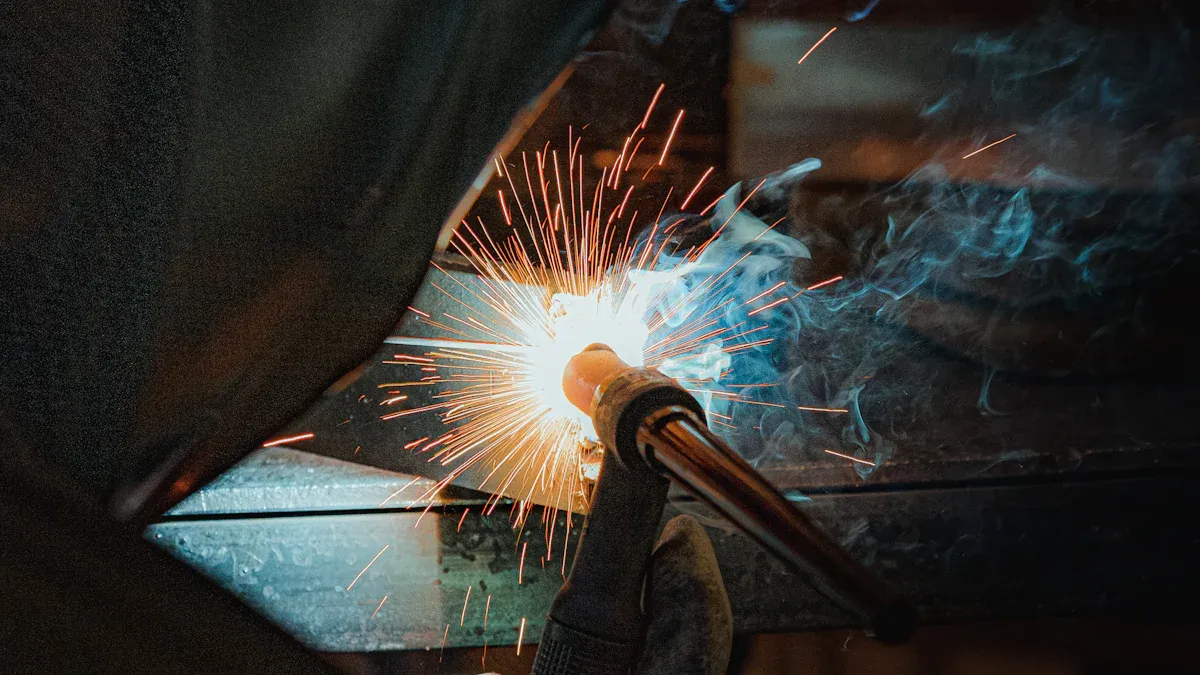
Permanent jewelry — pieces welded directly onto the wearer with no clasp — has moved from niche trend to mainstream service category in just a few years. The model is compelling for entrepreneurs: it requires a focused equipment investment, delivers exceptional margin, and creates a memorable client experience that drives referrals organically. For a small jewelry business looking to offer a distinctly experiential service with strong recurring demand, permanent welded jewelry consistently ranks among the highest-opportunity business models.
Welded Bracelets & Necklaces
The signature service is a bracelet or necklace fitted precisely to the client's wrist or neck, then permanently welded closed — no clasp, no removal. Clients love the intimacy of the process and the piece's symbolic permanence. Your core equipment checklist includes: dedicated flush cutters (not general wire cutters), chain nose pliers, a soft leather skin protector, safety goggles for both you and the client, grounded pliers for welding, an electrode sharpener, an argon gas tank for clean spark-free welds, and a curated selection of high-quality chains and machine-cut jump rings. Investing in quality chain from the start — gold-fill and sterling silver in 3–5 popular styles — gives clients meaningful choice without overstocking your inventory.
Experiential Retail Model
Permanent jewelry is inherently an experiential service: the entire value proposition is being present while your piece is created and attached. Smart operators lean into this fully, designing the session as an event rather than a transaction — teaching clients about materials, offering chain style choices, and creating a comfortable, celebratory atmosphere. The model extends naturally to pop-up events at boutiques, bridal shops, and fitness studios; add-on services like body piercing; and even AR/VR "magic mirror" technology that lets clients visualize options before committing. The more memorable you make the experience, the more likely clients are to return with friends — permanent jewelry bookings frequently arrive in groups.
Low Investment, High Profit Potential
Permanent jewelry delivers 70–85% gross margins — among the highest of any small jewelry business model. A finished welded bracelet using $5–$15 of chain and jump ring material sells for $60–$100, with the premium justified entirely by the craftsmanship and experience. Startup equipment costs are similarly accessible: a pulse-arc welder, flush cutters, two flat-nose pliers, auto-darkening safety glasses, and an initial chain selection in 3–5 styles (gold-fill and sterling silver are the most requested) can get you operational for $1,000–$3,000 total. The combination of low material cost, high perceived value, and strong word-of-mouth referral behavior makes this one of the most capital-efficient small jewelry business models available.
Upcycled & Vintage Jewelry
A small jewelry business built around upcycled and vintage pieces sits at the intersection of sustainability, storytelling, and premium craftsmanship — three attributes that today's conscious consumers actively seek out. Every piece carries provenance and character that new-production jewelry can't replicate, and the environmental narrative genuinely differentiates you from competitors without any additional marketing spend. This model works well for entrepreneurs who enjoy sourcing, have a good eye for quality, and want to build a brand rooted in authenticity.
Repurposing Old Pieces
Transforming vintage and antique pieces into contemporary designs requires both technical skill and curatorial vision — and the combination commands premium prices. Buyers of repurposed jewelry are paying not just for the piece but for its history, its craftsman's original intent, and the creative interpretation you brought to its second life. The handmade and vintage jewelry market continues to grow as consumers seek objects with meaning and specificity rather than anonymously produced accessories. Upcycling jewelry also carries a genuine environmental advantage — extending the useful life of materials that already exist reduces mining demand and waste, a story that resonates strongly with values-driven buyers.
Sourcing & Restoring Antiques
Successful antique and vintage jewelry sourcing is built on consistent routes: estate sales, probate auctions, antique dealer relationships, and online auction platforms all yield inventory at prices that leave room for restoration margin. Restoring antique pieces requires careful assessment — a qualified jeweler evaluates stone integrity, metal condition, and structural soundness before committing to restoration. The restoration process typically involves creating a wax model for any recontouring, casting, stone resetting or matching, polishing, and final quality inspection. When working with original stones, preservation is usually preferable to replacement — original stones add authenticity and value. Where metal reuse isn't feasible, documenting the original and incorporating its story into your product description keeps the provenance narrative alive.
Appealing to Eco-Conscious Buyers
Eco-conscious jewelry buyers are among the most loyal customer segments in retail — once they find a brand whose values align with theirs, they buy repeatedly, refer friends, and share purchases on social media with context about why the brand matters. This audience actively seeks upcycled and vintage jewelry as a lower-impact alternative to new production, and they respond well to brands that are transparent about sourcing, honest about limitations, and genuinely invested in their environmental mission rather than using sustainability as a marketing veneer. Building a clear sustainability narrative into your brand — your sourcing philosophy, your packaging choices, your restoration process — creates a coherent story that resonates and differentiates your small jewelry business in a way price and design alone cannot.
Digital-First Jewelry E-commerce
Running a digital-first small jewelry business removes geographic constraints and opens access to buyers across the country — or globally — from a single Etsy storefront or Shopify site. The competitive bar for online jewelry is high because product photography and customer experience expectations have risen with the market, but the ceiling for revenue has risen too. Businesses that invest in strong visuals, smart SEO, and trust-building social proof consistently outperform those competing on price alone.
AR Try-On Experiences
Augmented reality try-on lets online jewelry shoppers visualize pieces on themselves before purchasing — addressing the single biggest conversion barrier for jewelry e-commerce: uncertainty about how it will actually look. Shoppers who use AR try-on are 65% more likely to complete a purchase than those who don't, with the added benefit of lower return rates because buyers have more realistic expectations before ordering. AR effectively bridges the gap between digital browsing and in-store experience, and platforms like Shopify now offer accessible AR integrations that don't require significant technical resources to deploy.
Optimized Online Storefronts
Your online storefront is your primary sales channel and brand representative — it needs to perform on both dimensions. Page speed is a baseline requirement: slow-loading product pages lose mobile visitors in seconds, and mobile users now account for the majority of jewelry browsing. High-quality photography from multiple angles, including lifestyle and scale-reference shots, directly impacts conversion because buyers can't touch the piece. Customer reviews and testimonials displayed prominently reduce purchase hesitation — especially for first-time visitors — and influencer content showing real people wearing your pieces adds social proof that standard product photos can't replicate. Scarcity framing (limited availability, made-to-order messaging) can also support conversion and protect your pricing.
Influencer Marketing & Social Sales
Influencer partnerships are particularly effective for jewelry because the visual nature of the product translates directly to Instagram, TikTok, and Pinterest content that audiences engage with and save for later purchase consideration. Micro-influencers (10K–100K followers) in complementary niches — fashion, travel, wellness, lifestyle — often deliver better return than large accounts because their audiences trust their recommendations as genuine endorsements rather than paid placements. The online jewelry market's continued growth is being driven significantly by social commerce, where discovery, consideration, and purchase increasingly happen without ever leaving a single platform. For a small jewelry business, gifting to 5–10 aligned micro-influencers can generate more authentic reach than a single sponsored post from a large account.
DIY Jewelry Kits & Workshops
DIY jewelry kits and workshops address a consumer appetite for hands-on creativity that product sales alone can't satisfy. This model generates two revenue streams simultaneously — the materials or kit sold, and the experience of making — while building community and brand loyalty that repeat purchasers carry long after a single transaction. For a small jewelry business, workshops are also high-margin events because you're selling your time, expertise, and space rather than inventory.
Crafting Experiences for Consumers
The most successful jewelry workshop formats are tied to celebrations: bridal showers, bachelorette parties, birthday gatherings, corporate team events, and girls' nights are all occasions where participants want an activity that produces something beautiful and personally meaningful. DIY earring parties, nature-inspired pendant workshops, and bold resin jewelry sessions all work well in group formats where skill requirements are intentionally accessible — attendees should feel proud of their finished piece, not frustrated. Each workshop creates a strong emotional association between your brand and a memorable experience, making participants significantly more likely to return as buyers and recommend you as a gift experience.
Online Tutorials & Material Sales
Online tutorials extend your workshop model beyond local geography, allowing you to teach jewelry-making to students anywhere while simultaneously driving sales of the materials and kits they need. A YouTube or Instagram tutorial naturally creates demand for the exact beads, wire, tools, and findings used in the video — when you offer a curated supply kit bundled with the tutorial, the content itself becomes a conversion engine. This approach builds your audience, establishes your expertise, and generates recurring revenue from people who discovered you through a free tutorial and keep buying supplies as their skills grow.
Community Building Through Creativity
A jewelry-making community built around your brand is a compounding asset: every member who participates, shares their work, and helps other members is extending your brand's reach and reinforcing its identity without additional marketing spend. Host online challenges, share customer-made pieces with permission, and create a space — whether a Facebook group, Discord, or Instagram community hashtag — where people who share your craft gather and inspire each other. When your business becomes the hub of a creative community rather than just a supplier, customer lifetime value increases significantly because people stay for the belonging, not just the products.
Smart Jewelry & Wearable Tech
Smart jewelry — pieces that combine traditional aesthetics with embedded technology — represents the frontier of the small jewelry business market. While still a developing category, it sits at the intersection of health, fashion, and personal technology, and early-mover brands that get the design-function balance right are building loyal audiences in a space that established tech companies have approached clumsily. The opportunity is real, but it requires either technology partnerships or significant R&D investment.
Integrating Tech with Aesthetics
The central design challenge of smart jewelry is making technology invisible without compromising its function. Smart rings that monitor health metrics succeed when they look indistinguishable from fashion rings — clean, minimal, and wearable across contexts from the gym to the boardroom. Smart bracelets need to feel like accessories first and devices second. Tech-integrated earrings and necklaces with embedded sensors face the same challenge: the device functionality should be entirely hidden behind a design that a customer would want to wear regardless of the technology inside. Materials like polished titanium, rose gold finishes, and ceramic coatings achieve the premium aesthetic that makes wearers proud to be seen in smart jewelry rather than self-conscious about it.
Health Monitoring & Notifications
The functionality range across smart jewelry categories is growing rapidly. Smart rings now track heart rate variability, blood oxygen levels, sleep quality, and menstrual cycle patterns with accuracy that competes with dedicated fitness devices. Smart bracelets add stress monitoring, step counting, and hydration reminders to the mix. Tech-integrated earrings measure heart rate and skin temperature, provide UV exposure warnings, and detect sleep and activity patterns. Smart necklaces are emerging with aromatherapy diffusion, haptic feedback for calm notifications, and ambient light displays. For a small jewelry business, the most accessible entry point is white-labeling or partnering with an existing sensor platform and focusing your competitive differentiation entirely on the design and aesthetics.
Partnerships with Tech Innovators
Building smart jewelry from scratch requires hardware engineering expertise that most jewelry designers don't have — and trying to acquire it independently is expensive and slow. The more practical path for a small jewelry business entering this space is technology partnerships: licensing sensor modules from established IoT component manufacturers, partnering with wearable tech startups seeking fashion-forward design partners, or working with firms that provide white-label smart jewelry platforms. Leading smart jewelry brands prioritize on-device data processing (for privacy), compatibility with major health apps, minimal wireless footprint, and discreet charging solutions that don't break the aesthetic. Entering through a partnership gives you access to proven technology while you focus on the differentiation you actually control: design, materials, and brand positioning.
Men's Fashion Jewelry
Men's jewelry is one of the fastest-growing segments in the broader jewelry market, projected to expand at 5.22% annually through 2025 to 2035 as cultural attitudes toward men wearing jewelry continue to evolve. The category has historically been underserved by traditional jewelry retailers, creating durable space for small jewelry businesses that understand male aesthetic preferences and speak to them directly.
Designing for Male Consumers
Designing effectively for male consumers requires understanding that men's jewelry purchasing is heavily tied to identity expression and lifestyle coherence — pieces need to fit seamlessly into how a man already dresses and moves through the world, not add friction to his routine. Men who wear jewelry typically choose pieces that complement a specific aesthetic: streetwear, business casual, outdoor/adventure, or formal. Research your target customer's visual references before designing, and prioritize fit and proportion — jewelry that reads as too delicate, too decorative, or sized incorrectly for a male frame will fail regardless of its quality.
Focus on Masculine Aesthetics
Strong masculine jewelry design typically emphasizes geometry (sharp angles, clean lines, rectangular or octagonal forms), structural materiality (exposed metalwork, visible construction details that reference craftsmanship and utility), and scale (pieces proportioned for larger hands, wrists, and frames). Material choices signal toughness without ostentation: stainless steel, titanium, carbon fiber, oxidized silver, and wood all carry natural masculine associations. For stones, dark and opaque varieties — onyx, tiger's eye, labradorite, black spinel — work better than transparent or delicate gemstones for men's pieces. Matte and brushed finishes generally read as more masculine than high-polish, which skews more traditionally formal.
Targeted Marketing Strategies
Marketing men's jewelry requires dismantling the assumption that jewelry is primarily a gift category for men rather than a self-purchase decision. Position your pieces as personal style tools, not accessories someone receives. Cross-merchandising partnerships with tailors, barbers, and menswear boutiques place your jewelry at the point where men are already thinking about their appearance and making deliberate style choices. Male influencers in style, fitness, or outdoor niches provide authentic reach to audiences that distrust traditional advertising but respond to trusted voices. Social media ads targeted by interest (specific fashion brands, sports, music genres) with creative that shows men wearing the jewelry in context — not isolated product shots — consistently outperform generic campaigns.
Jewelry Repair & Restoration
Expert Craftsmanship for Valued Items
Jewelry repair serves a genuinely emotional need: clients bringing in pieces to repair are often protecting items of significant sentimental or financial value, which creates a strong service relationship when handled well. Core repair services include ring resizing and prong re-tipping, stone tightening and replacement, clasp and chain repair, and watch battery and crystal replacement. Credentials matter in this category: GIA certification demonstrates gemological knowledge that reassures clients you understand the material value of what you're handling, and membership in professional bodies like the American Gem Society (AGS) signals commitment to ethical practices and ongoing education.
Convenient Mail-In Services
Mail-in repair services expand your geographic reach beyond walk-in customers and make repair accessible for clients who don't live near a specialist. A smooth mail-in experience requires a clear intake process (your website guides the assessment and shipping quote), insurance coverage on all incoming and outgoing shipments, trackable shipping with signature confirmation, and proactive communication at every stage. Clients sending valuable or sentimental pieces need regular reassurance that their item is safe. Wholesale repair accounts — local jewelry stores that send complex work to specialists — are another significant revenue channel that builds predictable volume without requiring you to market directly to consumers.
Building Trust with HiFiveStar Reviews
For jewelry repair and restoration businesses, trust is the purchase decision — clients won't hand over an irreplaceable heirloom without confidence that you'll handle it with care and return it in better condition than they brought it. Online reviews are the primary trust signal for first-time clients researching local repair shops, and a steady stream of recent positive reviews is more persuasive than a static five-star average with no recent activity. HiFiveStar automates the review request process on Pro so that happy clients receive a prompt to share their experience at exactly the right moment — after pickup, when satisfaction is highest — without requiring manual follow-up from you. Monitoring reviews through HiFiveStar and posting your replies on Google also keeps your Google Business Profile active and signals to Google that you're an engaged, responsive business, which supports your local search visibility.
The 10 small jewelry business ideas in this guide span a wide range of investment levels, skill requirements, and target markets — but they share a common thread: each rewards specialization over generalization, and each depends on building genuine customer trust to sustain growth. Whether you choose the high-margin simplicity of permanent jewelry, the emotional depth of custom and heirloom work, the sustainability narrative of upcycled pieces, or the emerging opportunity in men's fashion jewelry, your long-term success will be built on the experiences you deliver and the reputation that follows from them. HiFiveStar makes it straightforward to collect, showcase, and respond to customer reviews — so that the reputation your small jewelry business earns with every satisfied client keeps working for you around the clock. Start managing your reviews today!
Frequently Asked Questions
How can you start a small jewelry business with little money?
The lowest-cost entry points are handmade jewelry (basic tools and starter materials for $200–$500), vintage resale (sourcing at estate sales before scaling), and DIY jewelry kits (which require more curation than craft skill). Selling exclusively online through Etsy eliminates storefront overhead entirely. A permanent jewelry business requires slightly more upfront ($1,000–$3,000 for equipment), but its margin profile recovers that investment quickly. The key principle: choose a niche where your startup costs are dominated by materials and tools rather than space or staffing.
Which jewelry business idea offers the most profit?
Permanent jewelry consistently achieves the highest gross margins — 70–85% — because the material cost per piece ($5–$15) is low relative to the price charged ($60–$100), and the labor involved is a 10–15 minute appointment rather than hours of bench work. Custom and bespoke jewelry also commands strong margin because the design fee and uniqueness premium justify prices that far exceed material costs. Jewelry repair is similarly high-margin for complex work. The lowest-margin models are handmade production jewelry at mid-market price points, where labor costs compress margin unless you can achieve significant volume.
Is a small jewelry business profitable?
Yes — a jewelry business is one of the most profitable small-business categories, with gross margins ranging from 50% to 85% depending on the niche. Permanent jewelry businesses achieve the highest margins (70–85%) because materials cost $5–$15 per piece while finished welded bracelets sell for $60–$100. Jewelry repair (65–80%), personalized and custom jewelry (60–80%), and sustainable jewelry (55–75%) are also highly profitable. Most models are operational for $500–$5,000, making the path to profitability short compared to other retail businesses. The keys to sustained profitability are niche specialization, overhead control, correct labor pricing, and building a strong review profile early — a jewelry business with dozens of five-star reviews converts new customers at significantly higher rates. See the full profitability breakdown above for margin data across all ten business models.
How much does it cost to start a small jewelry business?
Startup costs for a small jewelry business vary widely by niche. A handmade or DIY-kit business can launch for $500–$2,000 covering basic tools, an initial material inventory, and Etsy or Shopify setup fees. A permanent jewelry business requires a pulse-arc welder and starter chain kit, typically $1,000–$3,000 total. A vintage resale or repair business can start even lower—under $500 if you source inventory at estate sales before scaling. Factor in professional photography ($200–$500), packaging, and your first marketing spend; most bootstrapped small jewelry businesses are operational for under $5,000.
How important are online reviews for a new jewelry business?
Online reviews are critical, particularly in the first 12 months. Before a customer has any personal experience with your small jewelry business, your review profile is their only basis for trust. A business with 50 recent 5-star reviews converts at significantly higher rates than an identical business with no reviews — even if both have equally good products. Google reviews specifically drive both conversion and local search visibility, making them a direct revenue lever. HiFiveStar automates the process of asking satisfied customers for reviews on its Pro plan, so that building your reputation becomes systematic rather than ad hoc.
What are the biggest trends in jewelry for 2026?
The five most significant trends shaping the small jewelry business market in 2026 are: (1) sustainable and ethical sourcing, with buyers demanding transparency about materials and labor; (2) permanent and welded jewelry, which has moved from niche to mainstream and continues to grow; (3) hyper-personalization, including custom engraving, bespoke design, and pieces tied to individual life milestones; (4) men's fashion jewelry, with 5.22% projected annual growth driven by evolving attitudes toward men's self-expression through accessories; and (5) health-integrated smart jewelry, still emerging but gaining traction as wearable tech designers prioritize aesthetics over function-first design.
Do you need special skills to start a jewelry business?
Skill requirements vary significantly by business model. Permanent jewelry requires approximately 20–40 hours of practice to weld consistently clean connections. Handmade production jewelry requires bench skills that typically take 3–6 months to develop at a saleable level. Vintage resale and curation require sourcing judgment and knowledge of value, not craft skills. Custom and bespoke design requires either strong design and bench abilities or a trusted production partnership. DIY kits and workshops require enough proficiency to teach others confidently. The most important skill across all models is business acumen — understanding your customer, pricing for margin, and building a reputation through consistent quality and service.
How do I get customers for my small jewelry business?
The fastest way to attract customers for your small jewelry business is through online visibility—particularly Google reviews and local SEO. Encourage every customer to leave a review, list your business on Google Maps, and share your work on Instagram and Pinterest. Word-of-mouth and referrals remain especially powerful for jewelry, so delivering a memorable unboxing experience and following up after purchases also drives repeat business. Tools like HiFiveStar make it simple to collect reviews (automatically on Pro) and display them on your website.
What licenses do I need to run a small jewelry business?
Most small jewelry business owners need a general business license from their city or county, a seller's permit if your state charges sales tax on jewelry, and possibly a home occupation permit if you're working from home. If you plan to work with precious metals or gemstones, check your state's specific regulations. Many jewelry sellers start as sole proprietors, then form an LLC as sales grow to protect personal assets. Check with your local Small Business Administration office for state-specific requirements.
What makes a small jewelry business successful?
The most successful small jewelry businesses share five traits: a clearly defined niche instead of trying to appeal to everyone; a consistent brand identity with recognizable aesthetics, packaging, and voice; a steady stream of verified reviews that build trust with first-time buyers; disciplined pricing that accounts for labor, overhead, and a real profit margin rather than just covering materials; and repeat customer rates above 30%, achieved through follow-up, loyalty offers, and memorable unboxing experiences. Niche clarity is the single biggest differentiator — businesses that specialize outperform generalist competitors on margin, word-of-mouth, and customer loyalty in almost every jewelry segment.
How do I market a small jewelry business on a budget?
The most cost-effective marketing channels for a small jewelry business are Google reviews (free to collect, directly drives local search ranking and conversion), Instagram and Pinterest (free organic reach for visually-driven products), Etsy SEO (optimizing your shop title, listing titles, and tags costs nothing), and craft fairs or pop-up markets (direct sales channel with zero advertising spend). Email is also highly cost-effective once you have an initial buyer list — a simple newsletter with new arrivals and promotions converts at 3–5x the rate of social media posts. Reserve paid advertising for testing after you've validated that organic channels are converting; most small jewelry businesses do not need paid ads until they're generating $5,000+ per month in organic sales.
What are the best jewellery business ideas for beginners?
The best jewellery business ideas for beginners combine low startup costs with strong demand and manageable skill requirements. Handmade beaded or wire-wrapped jewellery is ideal for complete beginners — basic tools and starter materials cost £150–£400, and platforms like Etsy provide an immediate marketplace. Permanent (welded) jewellery is another top beginner pick: the 10–15 minute appointment model is easy to learn, startup equipment runs £800–£2,500, and gross margins reach 70–85%. Vintage and upcycled jewellery requires no manufacturing skill — just a good eye for sourcing at estate sales and charity shops. For digital-first models, curating or dropshipping an online jewellery store has the lowest capital barrier of all. Whichever jewellery business idea you choose, start with a clearly defined niche, keep overhead low, and focus on building your first 20–30 customer reviews before scaling.
What are typical revenue expectations for a small jewelry business?
Revenue varies widely by niche, channel mix, and how much time you invest, but these benchmarks give realistic targets: Part-time Etsy seller (10 hours/week): $5,000–$20,000/year. Full-time handmade or vintage jewelry business: $30,000–$80,000/year in revenue before expenses, with 40–55% net margin if overhead is controlled. Permanent jewelry business with regular events: $60,000–$150,000/year at 70–80% gross margin — one of the highest-margin models in the category. Custom and bespoke jewelry studio: $50,000–$200,000/year depending on order volume and price point. The key variable is repeat business: businesses with 30%+ repeat customer rates consistently outperform those that rely entirely on new customer acquisition.


Ready to Take Control of Your Online Reputation?
Join thousands of local businesses using HiFiveStar to get more reviews and grow faster.