Symitar Review (2026): Credit Union Core Banking by Jack Henry
Symitar is Jack Henry's core banking platform for credit unions. This 2026 review covers Episys features, SymXchange APIs, pricing models, and implementation timelines.

Symitar is the core banking platform—developed by Jack Henry & Associates—that powers thousands of credit unions across the United States. Built on the Episys core, Symitar consolidates deposits, loans, member accounts, daily transactions, and the general ledger into a single, unified environment. As we move deeper into 2026, credit unions face mounting pressure: members expect seamless digital experiences, regulators demand tighter compliance, and well-funded digital banks keep raising the bar. Symitar is engineered to help credit unions not just keep pace with those pressures, but get ahead of them.
What Is Symitar?
Symitar is a core banking platform developed by Jack Henry & Associates, designed exclusively for credit unions. At its center is Episys—a unified system that consolidates deposits, loans, member accounts, daily transactions, and the general ledger into a single integrated environment. Unlike generic banking software adapted for credit unions, Symitar was built from the ground up for the cooperative financial model, making it the most widely deployed core platform in the U.S. credit union industry.
In practical terms, Symitar replaces the patchwork of disconnected systems many credit unions have historically relied on. Member data updates in real time across every department: a loan officer sees the same account information as a teller, and mobile banking reflects the same balance shown at the branch terminal. This real-time unified view is what credit union leaders mean when they describe Symitar as a "single source of truth."
Key Takeaways
- Unified core platform: Symitar software integrates deposits, loans, member accounts, transactions, and the general ledger under one roof—eliminating data silos and manual reconciliation.
- Digital-first member experience: Real-time account access, mobile banking, automated transfers, and personalized onboarding increase engagement and reduce churn.
- Scalable architecture: Whether your credit union serves 5,000 members or 500,000, Symitar scales to handle volume growth without costly system overhauls.
- Built-in compliance tools: Automated regulatory reporting, full audit trails, and multi-factor authentication reduce compliance risk and protect member data.
- Open API ecosystem: SymXchange APIs connect Symitar to FinTech partners, CRM platforms, and AI tools—letting credit unions build the digital stack that best serves their members.
Do this faster
More 5-star reviews, higher local ranking, more customers. HiFiveStar helps you run that loop.
Symitar Software: Core Foundation for Credit Unions
Unified Processing for Operational Efficiency
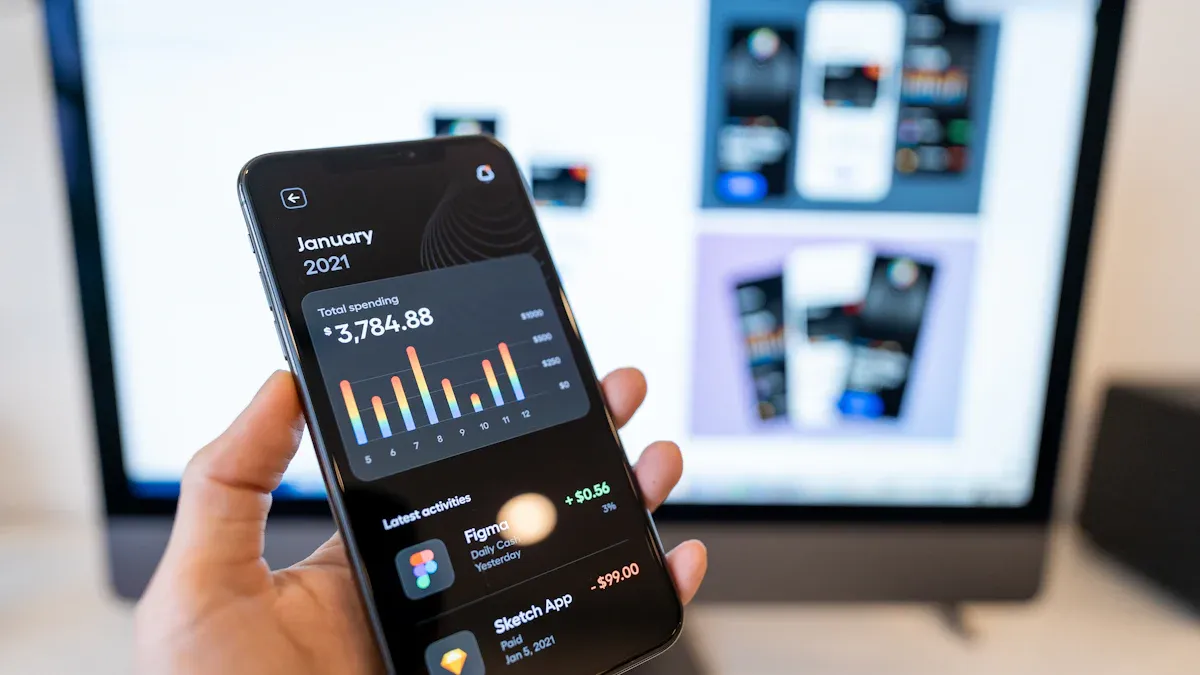
At its heart, Symitar software functions as a central data hub that connects every operational layer of a credit union. Deposits, loans, member accounts, daily transactions, and the general ledger all live in one environment. When information flows freely between these systems, staff spend less time reconciling spreadsheets and more time serving members.
Sound Credit Union put this to work by connecting their Jack Henry Symitar core with HubSpot CRM. Member data flowed directly into marketing workflows, giving sales and service teams real-time visibility into which products each member held—unlocking meaningful cross-sell and upsell opportunities.
Tip: Connecting core data with a CRM system like HubSpot or Salesforce can dramatically improve marketing effectiveness and member retention for credit unions of any size.
Chevron FCU took a similar approach, linking their Symitar core with downstream systems to eliminate dual data entry. The result: staff reclaimed hours each week, error rates dropped, and real-time updates propagated across all systems instantly—when a member updated their address or closed a loan, every connected platform reflected the change in seconds rather than days.
Scalability and Reliability for Future Growth
Symitar is purpose-built for the demands of financial institutions—not adapted from a generic software framework. Its architecture supports credit unions ranging from community institutions with a few thousand members to large regional organizations processing millions of transactions monthly. As your membership grows, Symitar scales with you, maintaining performance and uptime without requiring expensive re-platforming projects. That reliability is not incidental; it is a foundational design principle that ensures credit unions can make growth commitments to their members and actually deliver on them.
Driving Growth: Benefits for Credit Union Members in 2026

Enhanced Member Experience and Digital Engagement
Members' expectations have shifted permanently. Today's credit union member compares their banking experience not against other credit unions, but against the most frictionless digital apps they use daily. Symitar software helps credit unions meet that standard by modernizing core member-facing workflows.
One standout capability is real-time account transfers: when a member initiates a transfer through online or mobile banking, Symitar posts it to the core instantly. Credit unions can configure transfer limits by member segment, keeping risk controls in place without slowing down the experience. Freedom Credit Union reported a 78% increase in transfer volume after enabling real-time transfers through Narmi's integration with Symitar Episys. Simultaneously, the Episys 360 View gives members a consolidated dashboard of all primary and joint accounts, plus external loan records—visible in both online and mobile banking.
Michael Irwin, Director of Digital Strategy and Innovation at UFCU, captured the practical impact well: "UFCU's vision is a financially healthy community. We need to deliver personalized and actionable experiences that meet our members' evolving needs and expectations—day and night. The integration with Symitar Episys means we can automate our outreach, ensuring our members get help when they need it."
Andrew Lepczyk, industry analyst at Callahan & Associates, has noted that the choice of core system is increasingly consequential—members' expectations are calibrated by modern technology, and that bar only rises. Brynn Ammon, President of Credit Union Solutions at Jack Henry, frames Symitar's evolution in those terms: "We have decades of experience providing the highest level of service and groundbreaking solutions to credit unions across the country. We are building on that legacy with our cloud-native technology modernization strategy. Our goal is to make cutting-edge technology easily accessible to credit unions—enabling them to meet the evolving needs of their members and drive sustainable growth."
Operational Efficiency and Cost Reduction
Beyond member-facing features, Symitar software delivers substantial back-office efficiency gains. Eliminating dual data entry is the most immediate win: when data flows automatically from the core to downstream systems, staff reclaim hours previously spent re-keying information between platforms. Error rates fall, audit readiness improves, and the compliance burden lightens.
The operational gains compound over time. Automated wire initiations accelerate fund delivery. New loans post to the core the moment they close, giving loan servicing teams an accurate, real-time view of the portfolio. Mortgage teams can redirect energy from administrative tasks toward borrower relationships and product development. The net effect is an organization that handles higher transaction volumes without proportional headcount growth—a critical advantage as credit unions compete for talent in a tight labor market.
Robust Security and Regulatory Compliance
Credit unions operate in one of the most heavily regulated sectors of financial services, and Symitar software is designed with that reality in mind. The platform employs end-to-end encryption and multi-factor authentication to protect sensitive member data at rest and in transit. Automated security patching keeps the system hardened against emerging threats without requiring credit union IT teams to track every vulnerability manually.
On the compliance side, Symitar automates many of the reporting workflows that previously consumed staff time: BSA/AML reports, call reports, privacy disclosures, and more. Complete audit trails log every system action, giving examiners and internal auditors a clear chain of custody. That combination of automation and auditability helps credit unions demonstrate regulatory compliance with confidence.
Data Analytics for Strategic Decisions
Perhaps the most underutilized dimension of Symitar software is its analytics capability. Symitar's Advanced Reporting for Credit Unions (ARCU) provides 315 pre-built standard reports covering the full spectrum of credit union operations.
One credit union leader described the value directly: "We are fortunate that our core provider [Symitar] also has a data solution called Advanced Reporting for Credit Unions. Trend reports include year-over-year, month-over-month, day-over-day comparisons. Anomalies can be detected. Patterns are identified. Data is viewed in historical context along with goals and peer comparisons."
ARCU enables credit unions to answer strategic questions that were previously expensive to investigate: Why are members leaving? Which member segments show signs of mobile fraud? Which single-service members are most likely to open a second product? TwinStar Credit Union uses Symitar as the primary data source powering member insights, enabling targeted marketing that reflects actual member behavior rather than demographic assumptions. When credit unions segment their data thoughtfully, the result is offers that land with members at the right time—improving both conversion rates and member satisfaction.
How Symitar Adapts to 2026's Financial Landscape
Integration with Emerging Technologies
The financial technology ecosystem evolves faster than any single core banking platform can anticipate on its own. Symitar addresses this through an open architecture centered on SymXchange APIs—a robust integration layer that lets credit unions connect Symitar to best-in-class FinTech partners, AI-powered tools, and specialized niche platforms without waiting for Symitar to build those capabilities natively.
This openness pays practical dividends. Westmark Credit Union leveraged Symitar's hosted model to automate manual processes and reduce operational errors, freeing staff capacity for member service. Credit unions can select the FinTech partners that best match their strategy and their members' needs—and swap or add them without disrupting the core.
Cloud-Based Operations and Business Continuity
Symitar's hosted private cloud option gives credit unions the operational agility of modern infrastructure without the capital expense of maintaining on-premises systems. For IT teams, migrating to Symitar's hosted environment shifts maintenance and patching responsibility to Jack Henry, freeing credit union staff to focus on strategic projects rather than server upkeep.
Business continuity is another benefit that is easy to overlook until it becomes critically needed. Symitar's hosted infrastructure includes disaster recovery capabilities that shrink recovery time objectives and give boards confidence that operational disruptions—whether from natural disasters, cyberattacks, or infrastructure failures—will not derail member service for extended periods. Call center integrations further extend this reliability, letting agents verify member identity and access account data seamlessly through the Symitar core.
Pairing Symitar with HiFiveStar for Member Reputation Growth

Running Symitar software gives your credit union a powerful operational backbone—but members increasingly discover and evaluate financial institutions through online reviews and digital reputation. HiFiveStar is built to close that gap. The platform automates review collection via email and text, and can prepare WhatsApp requests for you to send; uses AI to draft replies to feedback; and connects with CRM and POS systems through Zapier or Make (on Pro) to trigger review requests for new members automatically. Credit unions using HiFiveStar report stronger Google Maps rankings, higher local visibility, and a steady flow of authentic member testimonials that attract new members organically. HiFiveStar sends requests by email, text, or WhatsApp, making review collection effortless for both staff and members.
Together, Symitar and HiFiveStar address the full member lifecycle: Symitar delivers the operational excellence that creates satisfied members; HiFiveStar turns that satisfaction into visible social proof that drives growth.
Symitar software is far more than a transactional core system. It is the operational foundation on which credit unions can build genuine competitive advantage—streamlining back-office processes, elevating digital member experiences, enforcing compliance automatically, and generating the data insights needed to make smart strategic decisions. Paired with reputation management tools like HiFiveStar, credit unions can translate operational excellence into the kind of trusted community presence that sustains growth year over year. Ready to see how HiFiveStar can amplify what your Symitar investment already delivers? Start building your member reputation today.
Symitar Software Pricing and Deployment Options
Symitar software pricing is not published publicly—Jack Henry & Associates structures agreements individually based on credit union asset size, member count, transaction volume, and the specific modules selected. That said, understanding the general pricing framework helps credit unions budget and negotiate effectively.
Hosted vs. In-House Deployment
Credit unions have two primary deployment paths for Symitar:
Hosted (Private Cloud): Jack Henry manages the infrastructure, patching, and disaster recovery. Credit unions pay an ongoing subscription fee that covers hardware, maintenance, and support. The hosted model is increasingly popular because it eliminates capital expenditures on data center equipment and shifts the burden of 24/7 system management to Jack Henry's operations team.
In-House (On-Premises): The credit union operates Symitar on its own data center hardware. This model gives maximum control but requires dedicated IT staff, capital investment in servers and redundancy, and a disciplined patching schedule. Larger credit unions with established IT departments sometimes prefer this path for regulatory or data sovereignty reasons.
Key Pricing Variables
- Asset size: Larger balance sheets typically correlate with higher base fees, reflecting increased transaction volumes and support complexity.
- Module selection: Symitar's core Episys platform is the foundation, but add-on modules—online banking, mobile, loan origination, member rewards, teller capture—each carry separate licensing.
- Integration count: Each SymXchange API connection to a third-party FinTech partner may involve per-integration fees or a bundled API access tier.
- Support tier: Jack Henry offers tiered support agreements; premium tiers include faster response times, dedicated account management, and proactive monitoring.
Tip: When evaluating Symitar software pricing, request a total cost of ownership (TCO) analysis that includes implementation, training, data migration, and annual support—not just the base license or subscription fee. The implementation phase for a core conversion typically spans 12–24 months for mid-to-large credit unions.
Getting Started with Symitar Software: Implementation Overview
Implementing Symitar software is a structured process that Jack Henry and its implementation partners manage closely. Understanding the typical timeline and milestones helps credit union leadership align internal resources and set realistic expectations with their board.
Core Conversion Phases
Phase 1 — Discovery and Planning (Months 1–3) Jack Henry conducts a detailed assessment of the credit union's existing systems, data structures, member account formats, and integration landscape. The output is a formal conversion plan that sequences every data migration, parallel processing requirement, and third-party interface.
Phase 2 — Configuration and Integration (Months 4–12) The Episys core is configured to match the credit union's specific product offerings, fee structures, and member-facing workflows. SymXchange API connections to online banking, mobile, and CRM platforms are built and tested in a non-production environment.
Phase 3 — Parallel Processing and Training (Months 9–18) Many credit unions run their legacy core in parallel with Episys for one to three statement cycles to validate data accuracy. Staff training occurs across departments—tellers, loan officers, member service representatives, and back-office teams each receive role-specific training on Episys workflows.
Phase 4 — Go-Live and Post-Conversion Support The cutover to Symitar Episys as the live production core is typically scheduled over a weekend to minimize member impact. Jack Henry deploys on-site and remote support staff during the cutover window and in the weeks immediately following go-live to resolve any issues that surface in production.
Key insight: The credit unions that report the smoothest Symitar implementations consistently identify one internal factor as decisive—a dedicated project manager who owns the conversion timeline, drives cross-department coordination, and serves as the single point of contact with Jack Henry's implementation team.
Frequently Asked Questions
What is Symitar?
Symitar is a core banking platform developed by Jack Henry & Associates, built specifically for credit unions. It is not a generic banking product adapted for the cooperative model—Symitar was purpose-built for credit unions from the start and is the most widely deployed core platform in the U.S. credit union industry. Its flagship system, Episys, unifies deposits, loans, member accounts, transactions, and the general ledger into a single integrated environment, giving every department real-time access to the same member data.
What is Symitar software used for?
Symitar software is a comprehensive core banking platform developed by Jack Henry & Associates, designed specifically for credit unions. It unifies deposits, loans, member accounts, transactions, and the general ledger in a single integrated environment—eliminating data silos and giving credit union staff a complete, real-time picture of member relationships.
How does Symitar improve member experience?
Symitar enables real-time account transfers, consolidated account views (Episys 360 View), automated digital onboarding, and seamless integration with mobile and online banking platforms. Members get faster service, personalized communication, and consistent access to account information—whether they interact via branch, online portal, or mobile app.
Can Symitar integrate with new technologies?
Yes. Symitar's open architecture centers on SymXchange APIs, which allow credit unions to connect the core to virtually any FinTech platform, AI tool, or third-party application. This openness means credit unions can build a tailored digital ecosystem without replacing their core system each time member needs evolve.
How does Symitar help with regulatory compliance?
Symitar automates many compliance-heavy reporting workflows—BSA/AML, call reports, privacy disclosures—and maintains comprehensive audit trails for every system action. The platform also employs encryption and multi-factor authentication to protect member data, reducing both compliance risk and the staff time required to prepare for regulatory examinations.
What is Symitar Episys?
Symitar Episys is the flagship core processing system within the Symitar product family. It serves as the central data repository for member accounts and transactions, and exposes the SymXchange API layer that powers integrations with online banking, mobile apps, CRM systems, and FinTech partners. Most references to "Symitar software" in a credit union context refer specifically to the Episys platform.
How does Symitar's data analytics work?
Symitar's Advanced Reporting for Credit Unions (ARCU) provides 315 pre-built reports with year-over-year, month-over-month, and day-over-day trend analysis. Credit unions can identify member attrition patterns, detect fraud signals, segment members by product usage, and benchmark performance against peer institutions—turning raw transaction data into actionable strategic insights.
What role does HiFiveStar play alongside Symitar?
HiFiveStar complements Symitar by automating online review collection on its Pro plan and supporting reputation management. While Symitar optimizes internal operations and member experience, HiFiveStar makes it easy for every member to share their experience publicly—and more fresh reviews can help your Google Maps ranking, attract new members, and build the kind of community trust that sustains long-term credit union growth.


Ready to Take Control of Your Online Reputation?
Join thousands of local businesses using HiFiveStar to get more reviews and grow faster.